Print Edition
Articles, notes, and symposia pieces published in CLR’s print volumes.
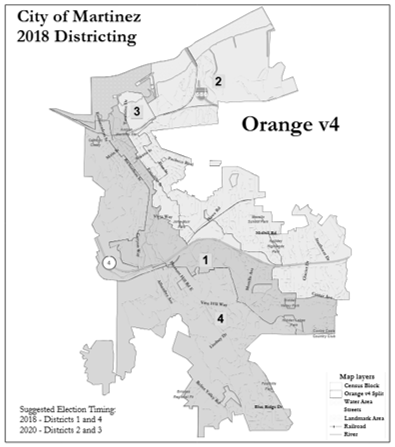
The California Voting Rights Act (CVRA) spurred hundreds of cities, school districts, and other local governments to transition from at-large to district-based elections. Although the CVRA attempts to address racial vote dilution, this Note finds that the CVRA creates unique incentives to adopt district-based elections, and that hundreds of California school districts have adopted district-based elections in the last twenty years. Drawing on data collected from school districts in the Bay Area, this Note finds that although the CVRA has likely had a positive effect on Latine and Asian American Pacific Islander (AAPI) officeholding in Bay Area school districts, our findings align with existing literature that some Bay Area school districts see no or even negative changes in Latine and AAPI officeholding. This Note argues that California law should be reformed to permit alternatives to district-based elections, that might better improve minority officeholding. This Note further argues that the CVRA should be amended to remove current incentives which have discouraged the use of alternative election systems.
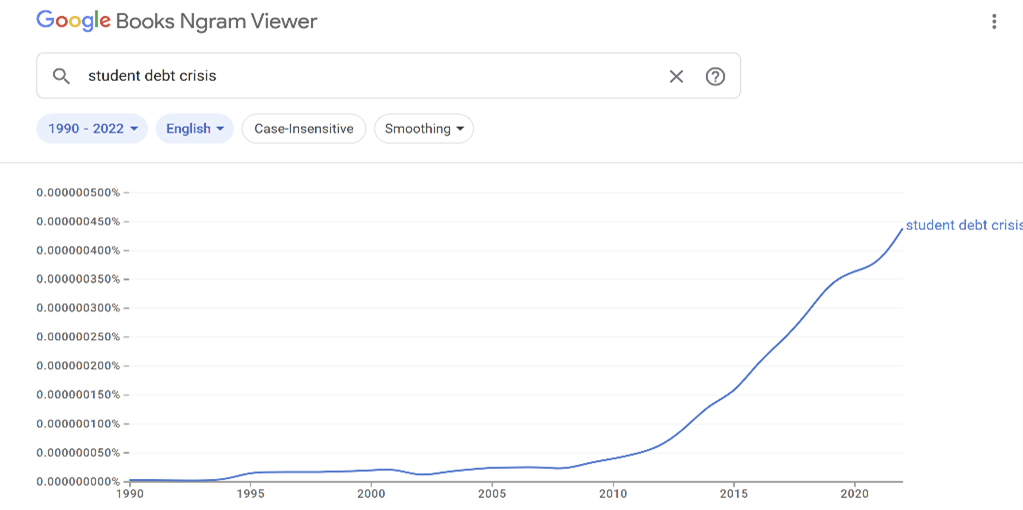
Between 2020 and 2024, the Department of Education undertook two massive experiments on the student loan system. These were the “Biden Reforms.” These efforts were almost entirely the result of administrative interpretation of longstanding statutory law, with Congress playing at most a supporting role. The Biden Reforms, which engendered intense partisan opposition, were mostly stopped before they took effect. And the Trump administration has begun to use its own administrative interpretations (or executive ignoring of statutes) to tear up core parts of federal higher education finance. This Article explains how these initiatives came about, how the Biden Reforms were foiled, and how the conflicts around both have reshaped the law and politics of student loans moving forward. We argue that the federal student loan system enabled insider-driven politics that allowed for legislative compromise.
“Punishment” is an all-important category in criminal legal thought. Conventional scholarship adopts a narrow definition and focuses on justifying penal sanctions. Much critical work, in contrast, seeks to expand the category—defining more practices and institutions as “punishment.” In this Article, I argue that the focus on the purposes of punishment and on what constitutes punishment distracts from a larger theoretical and practical issue: Much of what the criminal system does probably isn’t punishment as such. Certainly, a carceral sentence is punishment. But what about a curfew requirement for a defendant awaiting trial? What about a restriction on gun ownership postconviction? What about a traffic stop? Each of these restrictions on liberty or interactions with the criminal system might be stigmatizing or cause great hardships. So, it might be tempting to categorize them as “punishment.” While I am skeptical of conventional formalist definitions of “punishment,” I argue that striving to define more acts or institutions as “punishment” actually doesn’t accomplish much—as a doctrinal matter, judges are reluctant to afford defendants increased substantive or procedural rights in this realm.
Where do—and should—future disabilities fit within the law? Disability civil rights laws expressly extend rights to individuals with present or past disabilities, but it remains unsettled how the prospect of acquiring a disability in the future should be understood within these laws. Resolving this question is crucial not only for continued refinement of disability civil rights doctrine, but the inquiry has broader civil rights and healthcare implications given racial disparities in exposures to potentially disabling circumstances and the negative health effects of racism itself. This Article is the first to provide a comprehensive taxonomy of how future disabilities can be understood within disability civil rights laws. I articulate two overarching frameworks for situating future disabilities in the law. The Article addresses a critical doctrinal gap by articulating and analyzing each framework. I conclude that only a narrower subset of claims within the anticipatory accommodations framework appears apt for resolution under disability civil rights laws, but claims under the preemptive disability stigma framework align with the laws’ scope and could meaningfully advance their nondiscrimination purpose. I then call for clarification of the proper application of disability civil rights laws to future disabilities through judicial interpretation and, to the extent needed, regulatory and statutory reform. Lastly, this Article sets the stage for further work evaluating potential interventions beyond civil rights law that can more directly target the ways that racial subordination disparately produces both future disabilities and negative health outcomes.
Nearly every Chapter 11 filing is “voluntary,” in that it’s initiated by the company’s managers. Yet the Bankruptcy Code also allows unsecured creditors to force a company to reorganize under an “involuntary Chapter 11.” Involuntary Chapter 11s are rare and largely ignored by scholars. That’s potentially because bankruptcy and corporate law largely defer to managers’ business judgment on how to maximize the company’s value, and investors have several contract and corporate law tools designed to discipline underperforming managers. So, what work can involuntary Chapter 11s do? This Article shows that an involuntary Chapter 11 can be the optimal solution for a company with going-concern value that simultaneously faces two kinds of distress: financial and managerial distress such. This Article makes three main contributions. First, it shows that involuntary Chapter 11s have an important, but underappreciated, role to play in salvaging firms that have going-concern value. Second, it reveals how the current involuntary Chapter 11 system isn’t geared to serve that role because it allows a narrow class of investors to throw a company into Chapter 11 without having to show that the company faces managerial distress. Third, it sketches a new involuntary Chapter 11 system that incentivizes a wide range of investors to file involuntary Chapter 11s against companies facing both kinds of distress, while penalizing them for filing such cases against companies that face only one or neither kind of distress.
Before Ashcroft v. Iqbal, and its companion predecessor Bell Atlantic Corp. v. Twombly, a pleading only had to provide proper notice and set forth claims that were legally sufficient. But Twombly and Iqbal added a new factual-sufficiency standard to the pleading test: The nonconclusory allegations must set forth a claim to relief that is factually plausible in light of judicial experience and common sense. The two opinions were like earthquakes that rocked academics, practitioners, and judges. Although much ink was spilled in the immediate aftermath of Twombly and Iqbal, initial assessments, when the shockwaves were still being felt, could not fully capture the adjustments, practices, rulemaking angst, and doctrinal scaffolding that have developed with experience under the new standard. Fifteen years out, the iron has cooled, and expectations and understandings have settled. Now seems like an excellent opportunity for reassessment of Twiqbal’s more enduring legacies.
CLR Online
The web edition of the California Law Review.
In Relational Justice (OUP 2024) we rethink the normative foundations of private law and chart the path for a just reconstruction. We claim that the fundamental maxim of reciprocal respect for self-determination and substantive equality—relational justice, as we dub it—is (or should be) the distinctive normative commitment of a genuinely liberal private law. Anna Stilz, Mark Gergen, Abbye Atkinson, and Daniel Viehoff intriguingly challenge this proposition from various important perspectives. Addressing their critical concerns allows us to clarify the irreducible function of relational justice in guiding law’s construction of the legal frameworks that significantly structure a range of social spheres such as work, home, family, community, and commerce. These settings figure prominently in people’s lives as private persons rather than members of a specific political community. Relational justice captures the distinctive justice considerations that must guide law when it sets up the terms of interaction—the interpersonal rights and duties—within the legally constructed frameworks that constitute private law. Adherence to relational justice is necessary to establish private law’s legitimate authority and should guide its forms and functions.
After decades of dominance, the American Bar Association’s (ABA) influence on legal education faces challenges from both states and the federal government. States began increasingly questioning whether a single, self-selected organization should retain exclusive control over who may become a lawyer. Just this year, Texas and Florida were among the first to cease their dependence on the ABA, triggering a domino effect that prompted Ohio and Tennessee to open their own reviews. The federal government has also launched challenges against the ABA. The Trump Administration severed its decades-old practice to collaborate with the ABA to vet judicial nominees. These challenges may have long-lasting effects that can reshape law school attendance and bar admissions. At their core, questions about the ABA’s accreditation power signal a broader shift in who decides who becomes a lawyer.
Every day, in communities across the country, residents, consumers, workers, and the environment are subjected to unlawful conduct by public and private actors. Litigation challenging these pernicious practices has most visibly been led by private lawyers, non-profits, and state attorneys general. But local governments have also been an important part of the picture—a mighty but often untapped engine of progressive lawyering capable of redressing harms on multiple levels. The first essay in this two-part collection describes San Francisco’s current affirmative practice and the tools the City uses to hold both private companies and the federal government accountable to the people. This second essay details San Francisco’s longstanding partnership with Yale Law School—one of many capacity-enhancing strategies that has enabled the City to keep up with the demands of resource-intensive affirmative work. Together, the essays offer a potential path for other law schools and local governments seeking to establish clinics, externships, and other partnerships that can help law schools and public law offices to meet this moment and fulfill their potential as progressive plaintiffs.
Every day, in communities across the country, residents, consumers, workers, and the environment are subjected to unlawful conduct by public and private actors. Litigation challenging these pernicious practices has most visibly been led by private lawyers, non-profits, and state attorneys general. But local governments have also been an important part of the picture—a mighty but often untapped engine of progressive lawyering capable of redressing harms on multiple levels. This first essay in this two-part collection describes San Francisco’s current affirmative practice and the tools the City uses to hold both private companies and the federal government accountable to the people. The second essay details San Francisco’s longstanding partnership with Yale Law School—one of many capacity-enhancing strategies that has enabled the City to keep up with the demands of resource-intensive affirmative work. Together, the essays offer a potential path for other law schools and local governments seeking to establish clinics, externships, and other partnerships that can help law schools and public law offices to meet this moment and fulfill their potential as progressive plaintiffs.
Proponents of private law as a normatively distinct legal institution, including the influential Toronto School, assert that private law is an end in itself because it is uniquely suited to support the individual as the driver of their own destiny. In other words, private law should be understood as more than a mere instrument of public law’s broad utilitarian aim to serve the polity. Hanoch Dagan and Avihay Dorfman (“D&D”) are among these proponents. Yet, although D&D align themselves with the Toronto School to the extent that it “resist[s] the tendency of previous theorists to perceive private law as the continuation of public law by other means,” D&D proffer a unique view of private law’s orienting lodestar.
In Relational Justice Hanoch Dagan and Avihay Dorfman adopt a posture of indifference towards social morality. They take the position relational justice should neither follow nor try to improve social morality. This paper challenges the latter position and argues the relational justice project need not, and should not, be indifferent to social morality. While law should not follow social morality when it is immoral, lawmakers still have reasons to care when there is a gap between law and social morality. Trying to improve social morality to bring it into line with what law demands is one-way to address such a gap. Dagan and Dorfman renounce this solution arguing several reasons preclude law from trying to change social morality. These reasons include a commitment to liberal neutrality, an objection to rules based on motives, and an objection to ad hockery. This paper will show these reasons at most preclude using certain legal mechanisms to try to improve social morality. This paper will also explain in a general way how lawmakers should think about proposed laws that demand more of people than existing social morality, and the nature of the gap between relational justice and existing social morality.
Symposia
Articles accompanying CLR’s conferences. Published in the print edition.
Before Ashcroft v. Iqbal, and its companion predecessor Bell Atlantic Corp. v. Twombly, a pleading only had to provide proper notice and set forth claims that were legally sufficient. But Twombly and Iqbal added a new factual-sufficiency standard to the pleading test: The nonconclusory allegations must set forth a claim to relief that is factually plausible in light of judicial experience and common sense. The two opinions were like earthquakes that rocked academics, practitioners, and judges. Although much ink was spilled in the immediate aftermath of Twombly and Iqbal, initial assessments, when the shockwaves were still being felt, could not fully capture the adjustments, practices, rulemaking angst, and doctrinal scaffolding that have developed with experience under the new standard. Fifteen years out, the iron has cooled, and expectations and understandings have settled. Now seems like an excellent opportunity for reassessment of Twiqbal’s more enduring legacies.
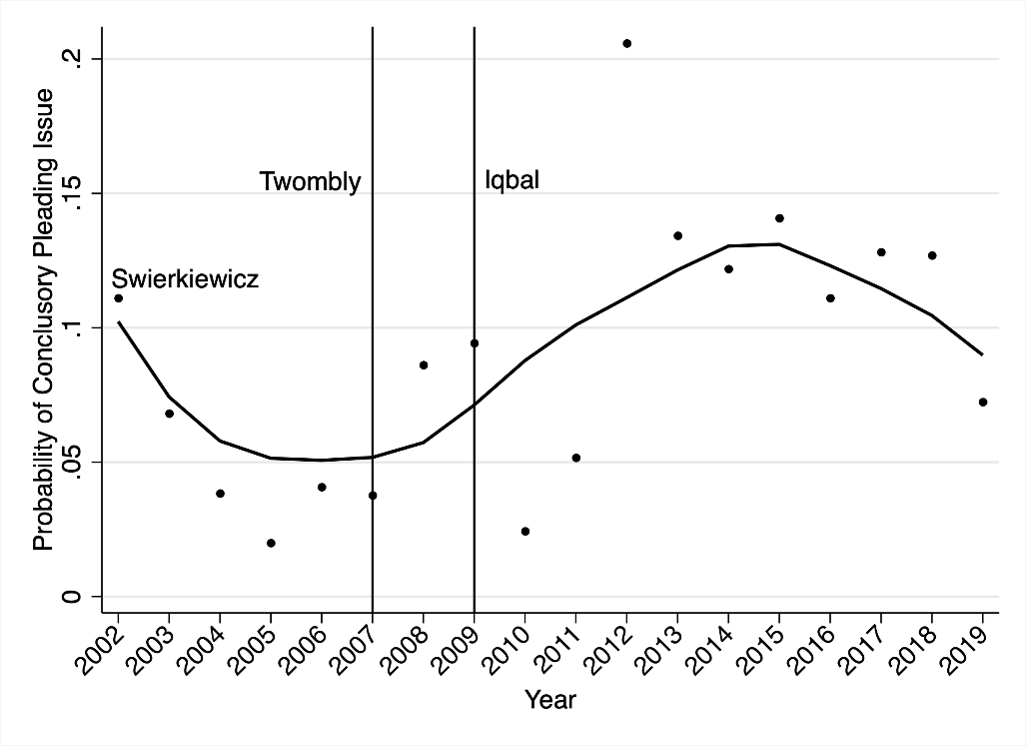
This Article presents the first systematic empirical study of “conclusory pleading” as a form of plausibility analysis in the U.S. courts of appeals following Ashcroft v. Iqbal, which critics argued would harm plaintiffs by creating excessive demand for information before discovery, and by increasing judicial subjectivity and ideology in decision-making in Rule 12(b)(6) decisions, particularly in civil rights litigation. Contrary to the canonical two-step account of plausibility pleading, courts of appeals almost never evaluate whether pleadings are conclusory fact by fact before proceeding to assess plausibility. Instead, in a one-step analysis they assess whether allegations, on the whole, are generally too conclusory to be plausible, or they render that judgment as to some particular key assertion in the context of the full complaint, without rejecting any other pleaded fact. Findings suggest that any increased judicial subjectivity after Twiqbal likely stems from aspects of plausibility doctrine other than conclusory pleading, shifts in case composition triggered by Twiqbal, or the broader politicization of pleading standards.
In this brief Essay, I want to focus on one aspect of the Iqbal decision that I have taught for many years and which, in my view, is useful for thinking about the policy implications of the heightened pleading regime that Iqbal and its predecessor, Bell Atlantic Corp. v. Twombly, introduced: the goal of deterring nuisance suits. Both Iqbal and Twombly famously changed the standard of fact pleading for nonfraud claims. They shifted the standard from the “possibility” regime suggested by the “no set of facts” language of Conley v. Gibson to one of “plausibility,” where the factual allegations must be nonconclusory and have some “heft.” Much has been written about just what plausibility means and whether it changed anything, either in theory or in practice. Here, I want to focus on the motivation for the change in pleading standards, specifically the strain and expenditures put on defendants in civil litigation.
In 2007 and 2009, the Supreme Court upended the long-understood notice pleading framework, replacing it with the plausibility standard introduced in Bell Atlantic Corp. v. Twombly and Ashcroft v. Iqbal. I proceed from the assumptions that the pre-Twombly/Iqbal pleading standard was, roughly speaking, the one announced in Conley v. Gibson, and that courts now generally apply the framework set forth in Twombly and Iqbal—which instructs judges to determine whether the nonconclusory allegations in a complaint plausibly show entitlement to relief—when defendants move to dismiss for failure to state a claim. The raison d’être of this Essay is my proposal, in Part II, for an amendment to Rule 12. In substance, this proposal amounts to a rebooting of efforts in the period shortly after Iqbal’s decision, to promote limited pre-dismissal discovery as a means of blunting Twombly and Iqbal’s effects on cases involving asymmetric information.
Ashcroft v. Iqbal is a doctrinally instructive case. Iqbal teaches that the test for sufficient pleadings turns on the concept of plausibility.[1] It clarifies that the previous, more permissive understanding of a sufficient pleading under Conley v. Gibson is no more.[2]Iqbal also reflects the Supreme Court’s skepticism regarding district court judges’ ability to manage complex discovery disputes effectively.[3] And it demonstrates the Court’s complex view of its rulemaking role—changing procedural rules by opinion. Yet, for civil procedure scholars, Iqbal also marks a shift in our approach to the scholarly enterprise. This Essay will explore three scholarly trends that can be derived from the academy’s response to the Iqbal decision. First, a vast array of scholars responded swiftly to Iqbal, with many civil procedure scholars taking an empirical turn. Second, Iqbal emboldened a burgeoning area of civil procedure scholarship focused on non-federal court procedure and adjudication. Third and finally, Iqbal sharpened scholars’ critical focus on procedure. While a strong “access-to-justice” perspective existed in procedural scholarship before Iqbal, that work focused less intently on immutable characteristics such as race.
The concern raised by David Strauss’s Essay might be addressed by positing an alternative, broader conception of judicial review than the one he proposes, which is inspired by the influential footnote in the Carolene Products case. My alternative view on the scope and nature of judicial review does not grow out of experience with American Constitutional history (which I am no expert on), but rather from a philosophical perspective grounded in liberal and democratic theory and from a comparative constitutional experience drawn from the European and Israeli contexts. I will present my position through a defense of two distinctions that seem essential to me.
Podcast
Interviews with the authors of articles, notes, or online pieces published in CLR.
It's almost election season in California, and this year marks the 25th anniversary since the introduction of the California Voting Rights Act, a law intended to eliminate electoral systems that dilute the voting power of racial minorities. Since the CVRA took effect in 2003, the Act transformed California's electoral systems. But did it create fair representation for people of color? On today's episode, Berkeley Law students Zach Griggy and Jonah Smith join Source Collect to discuss their student Note, Beyond District Lines: Rethinking the California Voting Rights Act's Promise of Fair Representation.
Algorithms shape our modern world, determining everything from which ads we might see on Instagram to who is afforded access to credit. Yet if you're not a machine learning engineer, it's hard to discern what decisions go into the development of these algorithms. That question -- what input decisions go into the creation of machine learning algorithms -- motivated Professor Fanna Gamal's latest article, The Algorithmic Racial Proxy. Professor Gamal, Assistant Professor of Law at UCLA School of Law, noticed that developers often exclude race and racial proxy variables as an input when creating machine learning algorithms.
In 2023, the Supreme Court decided Mallory v. Norfolk, Southern Railway Company, which held that consent remains a method of establishing personal jurisdiction independent of the minimum contacts test, first introduced by International Shoe Company. Washington. On the surface, this decision resolved ambiguities in personal jurisdiction doctrine. But, to explain to us how Mallory failed to consider the many complexities underlying consent to personal jurisdiction, Scott Dodson, a Distinguished Professor of Law at UC San Francisco, joins us to discuss his article, The Complexities of Consent to Personal Jurisdiction.
The amorphous administrative state is often oversimplified and misunderstood. Now, with the Trump Administration pushing for mass deportation and the DOGE dissecting and even disemboweling federal agencies, it is increasingly important to understand the different types of agencies, how they are run, and how agencies like the CBP, ICE, and the Bureau of Prisons create “at a massive scale the ‘field of pain and death’ that the law occupies.” From detaining federal criminal prisoners and immigrants to engaging in armed conflicts and carrying out domestic arrests, these agencies are governed by statutes, regulations, and internal guidelines that nonetheless fail to stop violence and the misuse of force.
People usually think that all tax agencies do is ensure tax laws are followed. But for decades, the IRS has regularly facilitated immigration raids. These raids target employees even as the IRS investigates their employers’ potential tax violations. What can this state of affairs teach us about agency overreach? And what alternate paths could better align the IRS’s efforts with its mission? In this episode, UC Davis School of Law Professor Shayak Sarkar discusses the IRS's underappreciated role in immigration enforcement.
Traffic courts resolve over half of the cases in the U.S. legal system. These cases are easy for some defendants to handle by paying a fine, but they can have devastating effects for those with fewer means. And despite the key role these courts play in funding state judicial branches and other state and local programs, they have not been comprehensively studied in decades. What’s going on in traffic courts? And what can they teach us about the legal system more broadly? In this episode, Arizona State University Sandra Day O’Connor College of Law Professor Justin Weinstein-Tull explains his research on traffic courts.